Turning food access into hands-on learning and shared growing
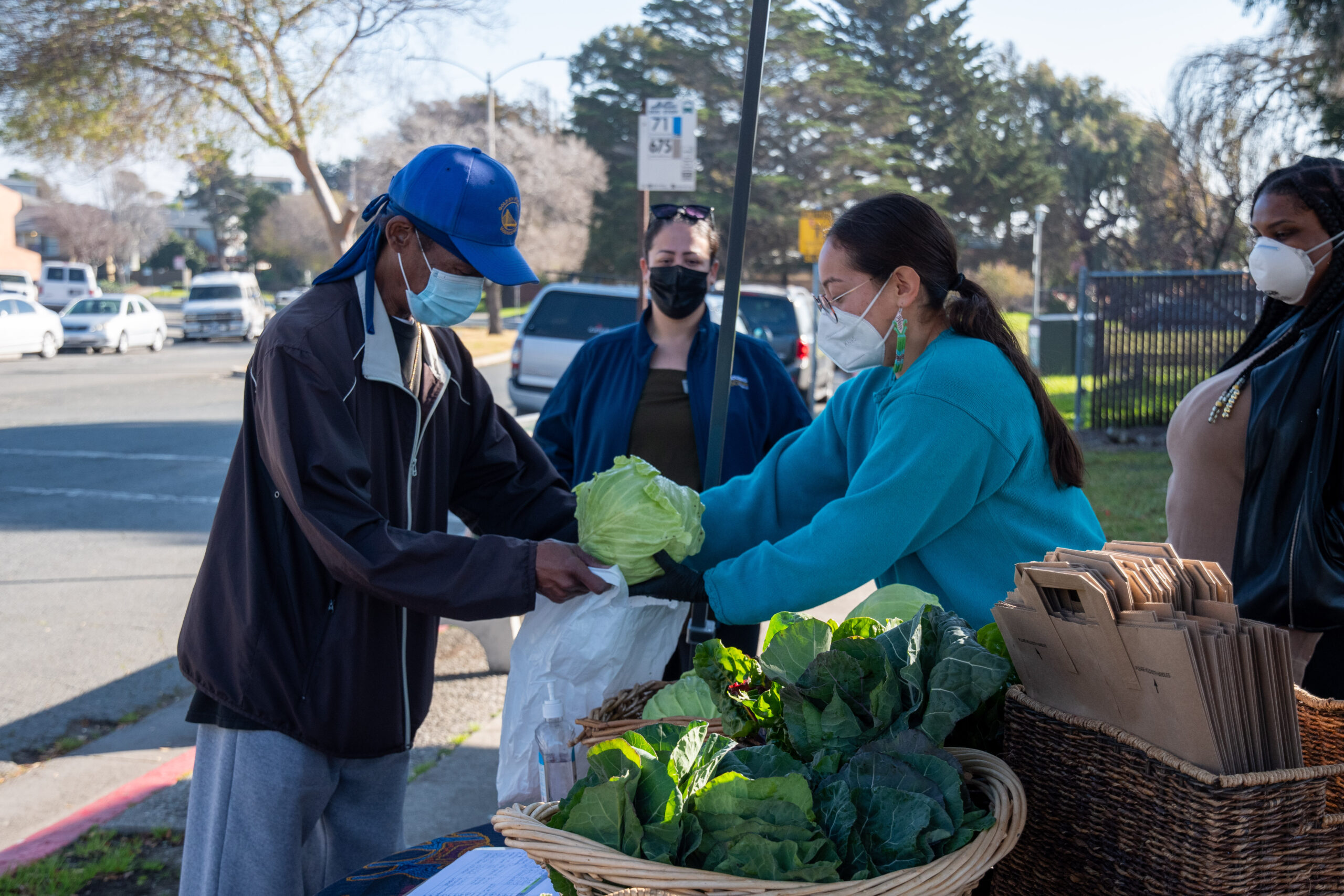
Our FREE Farm Stand Program began with just one farm stand in NorthRichmond. Over the past 4 years this has blossomed into 5 thriving community hubs serving residents from North Richmond, the Iron Triangle, Parchester. Every week, our 5 FREE Farm Stands provide something essential: fresh, locally grown produce, available at no cost. This food is grown and distributed by people right here in Richmond and the greater Bay Area, making each stand a reflection of the community itself. The stands also provide other resources like free plants, seeds, healing herbs, and monthly cooking demonstrations. In neighborhoods where healthy food can be hard to access, the stands have become a reliable community health and wellness hub. People return week after week for nourishment, for choice, and for a sense of dignity in how they feed themselves and their families.
Over time, another pattern began to emerge. Community members wanted to be involved in growing the food they were receiving. Questions came up again and again: How do I care for this plant? When should I start seeds? How can I join in? The interest went beyond access. People were looking for knowledge, hands-on experience, and a deeper connection to the process.
“We used to give out plants and people would ask, ‘How do I take care of this?’” said Tania Jacobo, who leads the program. “We’d share what we could in the moment, but people kept asking for more. They wanted time to learn with us.”
That interest developed into the farm stand volunteer days, now a seasonal learning series offering hands-on experiences people can apply in their own spaces. Topics range from transplanting, so when someone picks up a plant at a farm stand and brings it home they have the skills to help it thrive, to other seasonal practices, with more to come.
Sessions combine practical skills with open conversation, giving participants space to ask questions, troubleshoot challenges, and learn alongside one another.
The response has been immediate. After the first session, nearly every participant returned, joined by new faces. When asked if they would attend again, every single participant said yes. People describe the experience as “educational and fun,” and something they “enjoyed and learned a lot from.” More importantly, they leave feeling confident. Confident enough to try growing food at home, and confident enough to share what they’ve learned with others.
That ripple effect is already taking shape. One participant, a local teacher, has begun sharing what she learned with colleagues and is planning a gardening day for students and families. Others have spoken about starting gardens in their own yards, or bringing this knowledge back to their communities. What starts at the farm stand does not stay there.
There is something else happening in these spaces that goes beyond education. “It feels like a reunion,” Tania shared. “People recognize each other. We remember their names. It doesn’t feel transactional.” That sense of connection is intentional. Staff take the time to build relationships, and participants return not just for the information, but for the feeling of being part of something. Over time, familiarity turns into trust, and trust into community.
The volunteer days expand on what the farm stands have made possible from the start. Access to fresh food matters. Access to knowledge, land, and the experience of growing food strengthens that foundation. Urban agriculture plays a critical role in this work, ensuring that food production is rooted in the communities where people live.
As the farm continues to evolve, the structure and location of the program may shift. Interest continues to grow, with participants asking for more sessions, more topics, and more ways to stay involved.
The need is clear, and so is the momentum. With continued support and participation, this program can expand its reach, deepen its impact, and create more spaces where food, knowledge, and community come together.
Programs like our Free Farm Stands and farm stand volunteer days are sustained through community involvement. Donating, volunteering, sharing the work, and helping spread the word all play a role in keeping this going. When people have access to food, and to the knowledge and relationships that surround it, something lasting takes root.