Verde Elementary at the Bioneers Conference
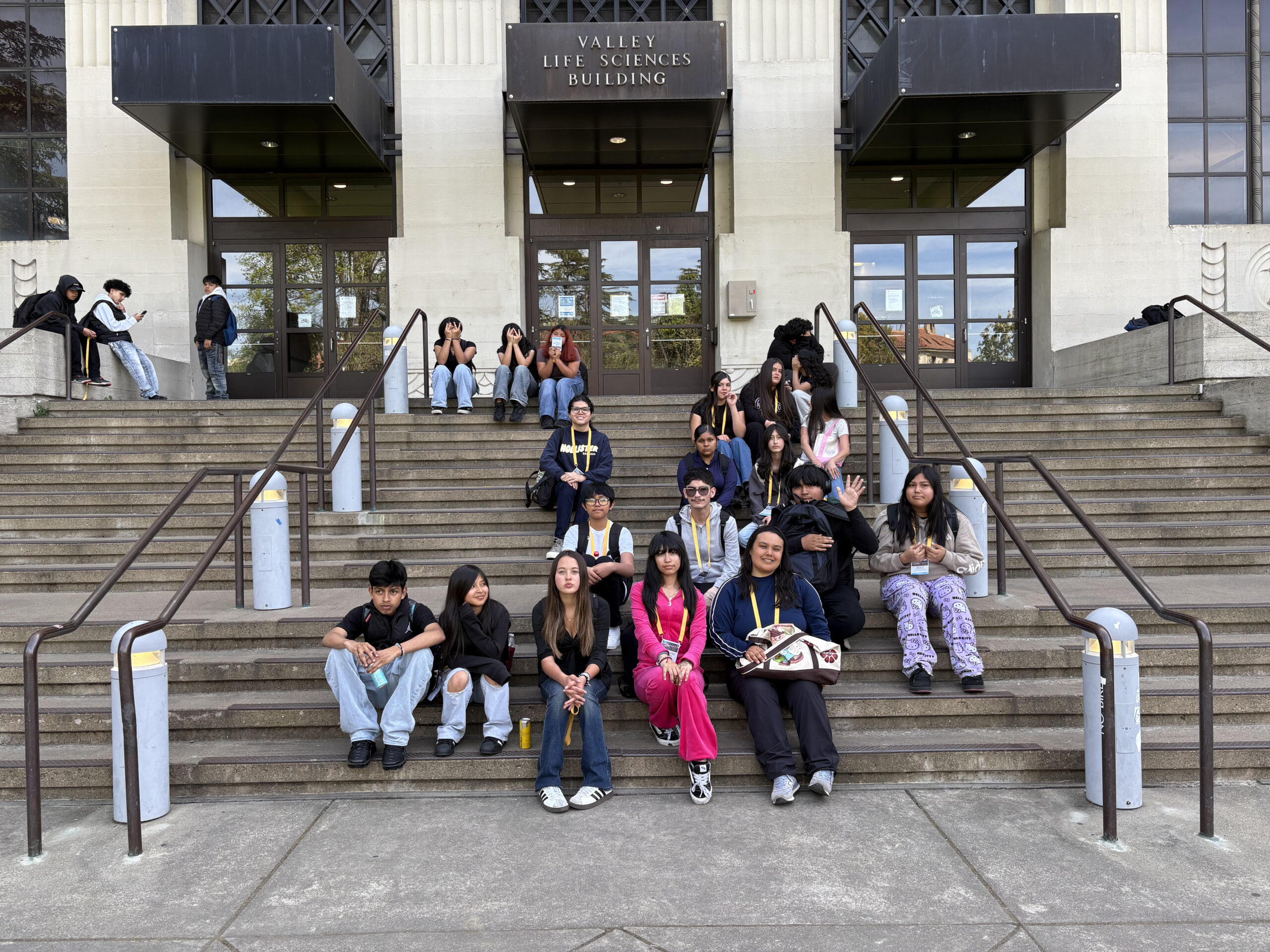
A group of 30 middle school students from Verde Elementary stepped into a much larger conversation about climate, culture, and community at the Bioneers Conference in March 2026. Organized by the Verde team as part of Urban Tilth’s education programs, the trip came together through intense last-minute fundraising and coordination to make sure students could attend.
From the moment they arrived, students moved through a space that felt bigger than anything most had experienced before. They toured the UC Berkeley campus, explored paleontology exhibits, and met students and conference attendees from different places and backgrounds. Between sessions, they navigated hallways, paused at displays, and followed conversations that often continued informally in the margins of the event.
Across the programming, students encountered ideas that kept returning to a shared question of what voice actually is, and where it lives. Not only in speech, but in story, in land, in sound, and in action. This idea first appeared in Gary Farmer’s emphasis on storytelling as something rooted in lived experience and self-determination, where telling your own story becomes a way of shaping what is seen and understood.
From there, the idea expanded further in musician and composer Garth Stevenson’s reflections on playing his double bass in Antarctica and finding himself in an unexpected exchange with humpback whales moving through the surrounding waters. What he described was not language in the usual sense, but something closer to response, where sound crossed boundaries of species and intention and became relationship.
It expanded again in writer and naturalist Terry Tempest Williams’ reflections on “The Glorians,” the often overlooked presences in the natural world that draw attention to how much life is always already speaking around us. In her framing, attention becomes a kind of listening practice, a way of recognizing that the more-than-human world is not distant, but continuously reaching toward us.
It becomes most tangible in the stories of Indigenous-led restoration along the Klamath River, where young people are actively participating in the river’s recovery following the removal of four dams. Here, voice is not metaphorical at all. It is carried through presence on the water, through ongoing care for land, and through action that is already reshaping the conditions of a living system.
Across these moments, a shared idea begins to take shape: that voice is not only spoken, but lived through story, through land, through sound, and through action. It shows up in Gary Farmer’s emphasis on storytelling as self-determination. It moves through Garth Stevenson’s encounter with whales and sound across species. It takes shape in Terry Tempest Williams’ framing of attention as a way of recognizing the more-than-human world that is already reaching toward us. And it is made tangible in the Klamath River, where young people are not waiting to be included in environmental work, but are already carrying it forward.
For many of the students, the most lasting shift was not a single lesson, but the accumulation of these moments. The spaces they moved through made room for them to begin placing themselves within wider systems of climate, justice, and care, often circling back to what felt familiar and what felt newly possible.
Behind the scenes, making the trip possible required a significant collective effort from the Verde team and the broader Urban Tilth community. The coordination, fundraising, and planning reflected a commitment to access that shows up consistently in their work: if young people are going to understand the world they are growing up in, they need to be in it, not just reading about it. That means treating opportunities like this not as enrichment or extras, but as part of the learning itself, on the same level as time in the classroom or in the garden.
The trip also sits within how the Verde team approaches education in practice. That commitment shows up in ongoing work like weekly garden and farm-based learning days, seed starting and transplanting sessions, and youth involvement in tending food systems from soil to harvest. Students don’t just learn about food systems in theory, they work directly with them, in spaces where planting, composting, and harvesting are part of regular rhythm. Across these experiences, learning is built through direct engagement with land, food systems, and the environmental and social conditions shaping students’ lives in North Richmond and the wider Bay Area. It becomes part of a longer arc of work that helps students connect what they are learning to what they already know from their own neighborhoods, and to recognize themselves as active participants in those systems, not just observers of them.