Since 2022, Urban Tilth has worked collaboratively with SF Estuary Institute, UC Berkeley, SF Estuary Partnership, the Hood Planning Group and an incredible team of community members to develop a community-based vision for the ongoing development of green stormwater infrastructure in the Iron Triangle neighborhood of Richmond.
Green stormwater infrastructure (GSI) encompasses a number of different practices and urban design features that utilize the natural power of soil and plants to manage the volume, timing, and cleanliness of stormwater as it flows off our streets and out to the Bay. Over the last 100 years, urban watersheds like those in Richmond have become harder and less absorbent. When we pave over our watersheds, the natural absorptive capacity of our soils is lost, which can lead to dangerous and impactful flooding in our community, as the amount of stormwater runoff exceeds the capacity of our storm drains and urban creek systems.
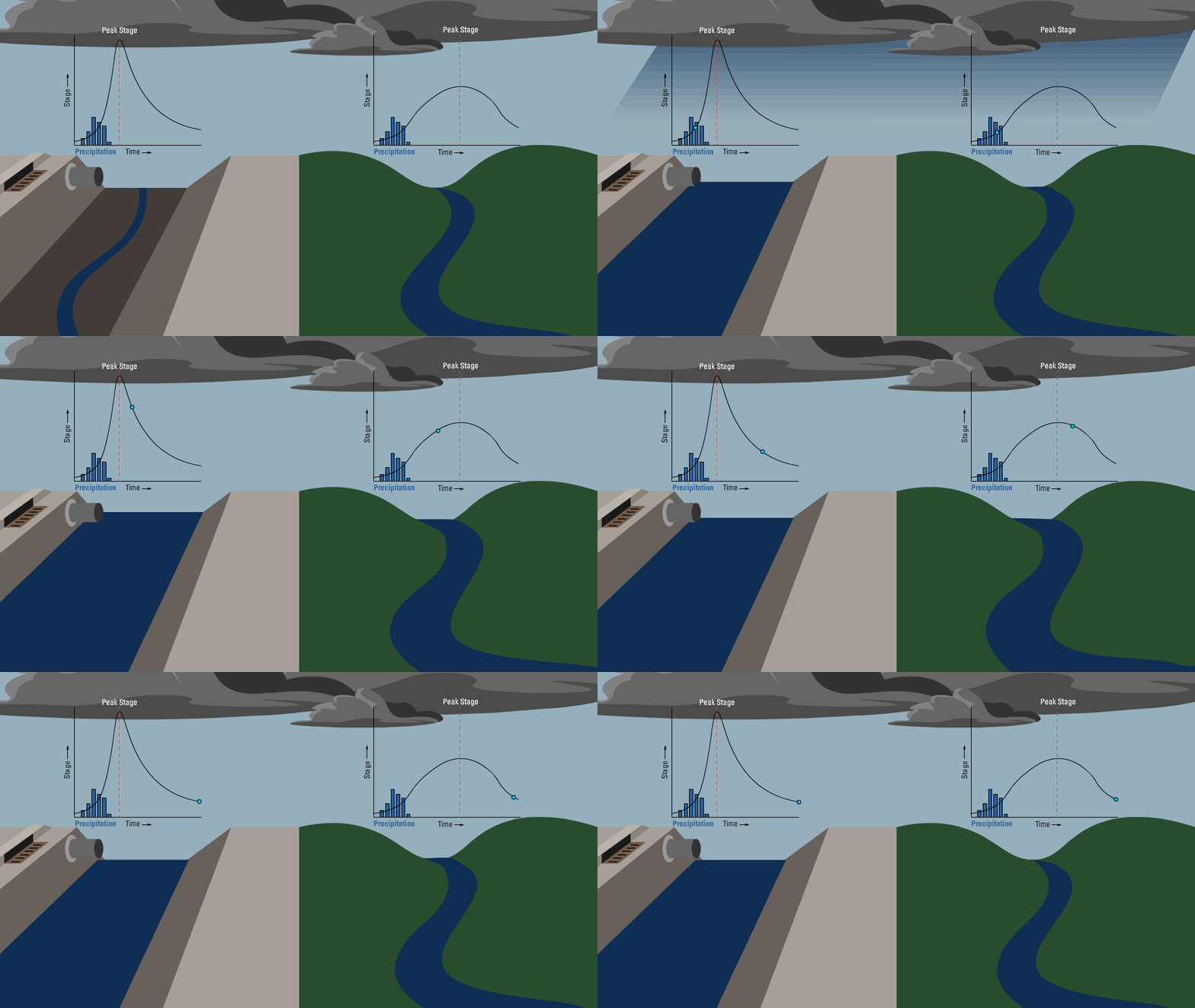
Image credit: Rowan Johnson, USGS. The image illustrates the difference between a concrete watershed (drainage basin) and a more natural, absorbent system. When receiving the same amount of rain, the water in the hardened channel (left) rises more quickly and potentially causes more flooding than the more absorbent earthen channel (at right).
Green infrastructure intends to reverse this process, creating more soft urban landscapes that absorb and clean stormwater, thereby reducing flooding and helping our watersheds return to their pre-development patterns. The plants in green stormwater infrastructure installations can also help beautify our community, clean the air, and provide habitat for pollinators. But these features need to be properly maintained in order to succeed.
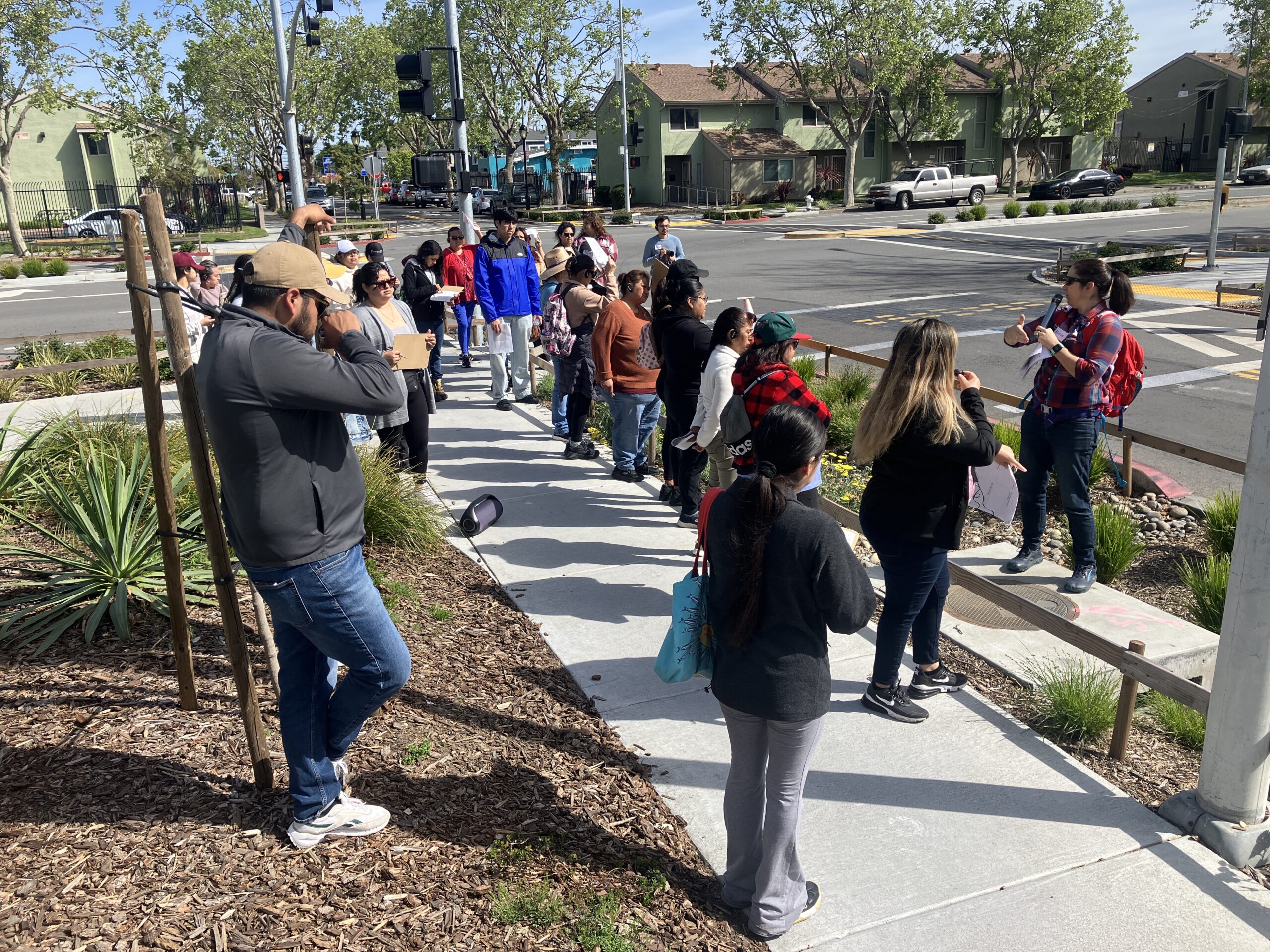
Starting in Spring 2025, the project team hosted a community workshop series to better understand the state of stormwater in the Iron Triangle neighborhood. The goals of the workshop series were three-fold: give community members access to scientific information and tools, ensure city planning documents reflect the up-to-date needs and expertise of the community, and provide a model for a new paradigm, in which community voices and resident expertise meaningfully supports and instructs GSI planning within the City. We wanted to hear directly from community members: How does stormwater affect your community? What are the strengths of the Iron Triangle community, and what are the challenges? Finally, we wanted to ensure that any development of green infrastructure in Richmond didn’t contribute to displacement and gentrification – that these investments would honor, uplift and support the power and sense of belonging of the people who live here.
In the workshop series, community members shared their lived experiences of flooding, pollution, and infrastructure struggles as well as the strengths of their local community. Community members took part in educational workshops, a neighborhood tour to learn about existing green infrastructure installations, visits to local sites like the Richmond Greenway, and contributed feedback that will help inform and update scientific data about our local ecosystem. Participants also mapped community assets and challenges, evaluated GSI strategies like rain gardens and tree wells, and helped prioritize potential pilot projects within three big categories: Maintain existing GSI, Enhance existing GSI, and add New GSI.
Hands-on stewardship activities and discussions emphasized the importance of long-term maintenance and the need for sustained care to ensure the success of these features. The need for long-term maintenance was identified by community members as one of the most critical elements of any GSI plan, otherwise these features can become an eyesore and fall short of providing ecological and community benefits. By July 2025, residents had reviewed and refined the final draft neighborhood GSI plan, identifying priority sites grounded in both lived experiences and highly-technical scientific data. The result is a shared vision and actionable framework for green stormwater investment that reflects the knowledge, care, and expertise of the Iron Triangle Community.
This project is wrapping up with a Final workshop in May 2026, if you are interested in getting involved or learning more, please contact cheryl@urbantilth.org.