Something new is taking shape at the North Richmond Farm, not just in the landscape, but in what is possible for learning.
As two outdoor classrooms emerge from the soil, they are already opening up new opportunities for young people and families to connect with the land in meaningful, hands-on ways. Thanks to the successful effort to raise the $35,000 needed to build these spaces, the vision is already becoming reality, with youth and community members actively learning, gathering, and growing here. These classrooms are not waiting to be finished to make an impact. They are already supporting programs that invite participants to step into the rhythms of the farm, learn by doing, and build relationships with the natural world.
This spring, the farm will welcome local middle school youth for a week-long Spring Break program centered on sustainable agriculture, local food systems, and environmental exploration. Participants will spend their days outdoors, transplanting seedlings, learning where food comes from, and building skills, confidence, and community along the way.
At the same time, After School at the Farm has returned, offering a consistent, nature-based learning space for Pre-K through 5th grade students and their families. Timed with early release school days, the program creates a reliable opportunity for young people to be outside, engaging directly with the farm through hands-on agricultural activities, art, games, and shared meals.
Together, these programs reflect a deeper purpose behind the outdoor classrooms. They are designed to address the limited access many Richmond and San Pablo families have to outdoor educational spaces, while creating environments where learning feels active, welcoming, and rooted in real experience. Through planting, harvesting, exploring, and creating, participants build practical skills while developing curiosity, confidence, and a sense of belonging in nature.
Environmental literacy is at the core of this work. Lessons introduce participants to the systems that sustain healthy food and ecosystems, while encouraging them to see their own role within those systems. By learning in direct relationship with the land, young people begin to understand not just how food grows, but how their choices and actions shape the world around them.
These programs are unfolding alongside the continued construction of two dedicated outdoor classrooms, spaces that will deepen and expand this work in the seasons ahead.
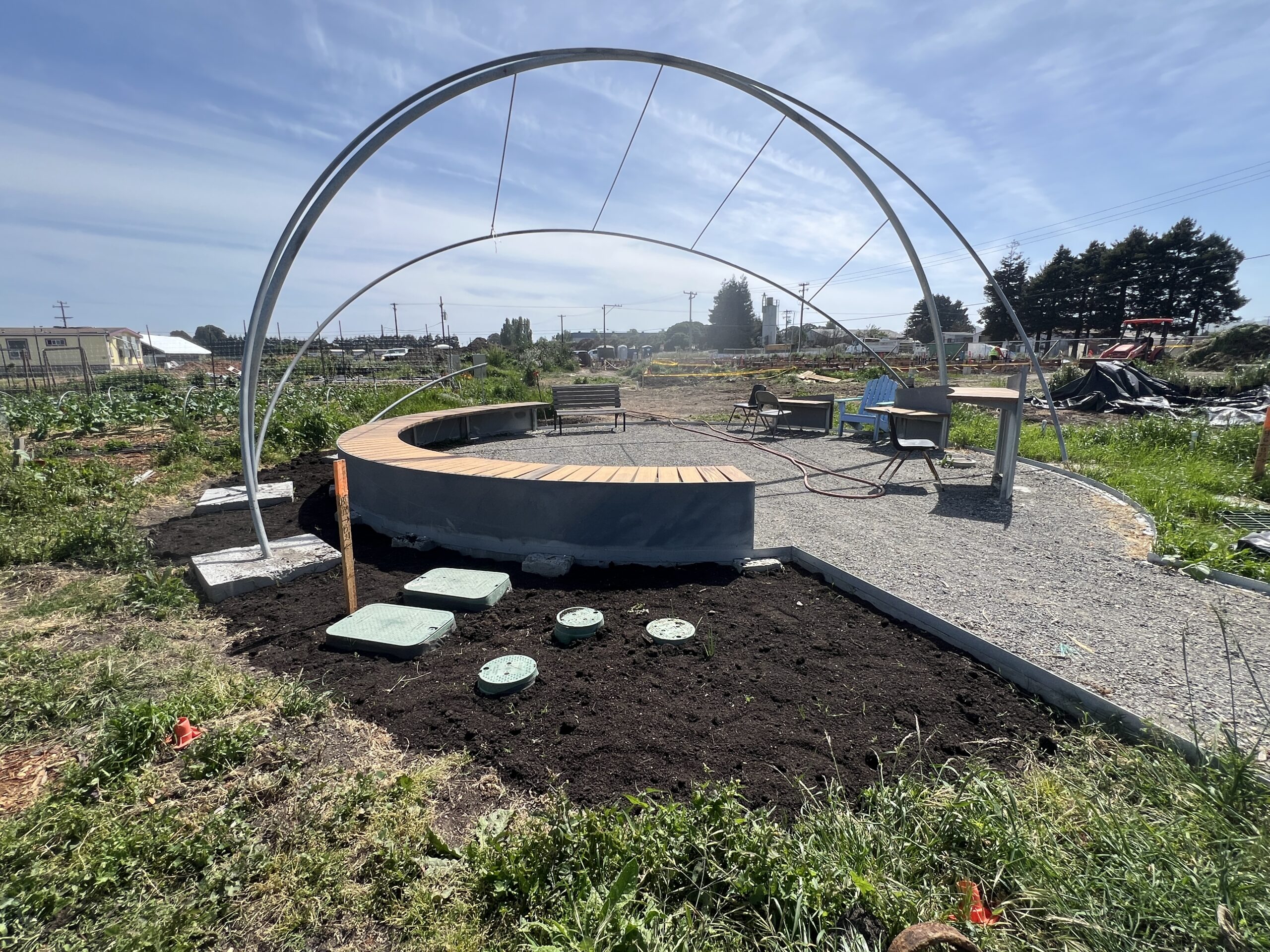
The Crop Row Outdoor Classroom, located alongside active growing beds, is structurally nearing completion. A metal lattice will soon be installed to support grape vines that will grow overhead, forming a living canopy that provides shade and produces fruit. Edible and native plants will fill the surrounding beds, transforming the space into a classroom that grows and changes over time. Irrigation infrastructure is already in place, with drip lines to support these plantings, and community members will help bring the space to life during upcoming volunteer days.
Nearby, the Orchard Outdoor Classroom is also in its final construction phase. Crews are installing wooden benches and panels, completing grading, and preparing the site for pavers and planters. Like the crop row space, it will be shaped through community participation, with planting days that invite volunteers to help establish trees, native plants, and pollinator habitat. Set within the orchard, this classroom will offer a space for reflection, storytelling, workshops, and hands-on learning under the canopy of trees.
Together, these classrooms create distinct yet connected environments, each grounded in the living systems that surround them and designed to support different forms of gathering and learning.
They are part of a broader Phase 2 buildout that is transforming the farm into a fully realized community campus. New infrastructure, including a tool shed and staff break room, watershed workshop, composting toilet, native plant nursery, honey extraction room, and main greenhouse, is moving toward completion. These facilities support the daily work that makes the farm both a productive landscape and a center for education and community engagement.
The main greenhouse will significantly expand the farm’s ability to grow plants year-round, supporting propagation for the farm, the nursery, and community distribution. Additional improvements across the site, including landscaping, rain gardens, orchard expansion, fencing, lighting, utilities, and interpretive signage, are helping make the farm more accessible, welcoming, and resilient.
With most structural work in place, the final phase will focus on interiors, utilities, and finishing details. If the remaining funding gap can be closed, these spaces could be fully completed in the coming months.
But the impact of the outdoor classrooms is already being felt.
It lives in the young people planting their first seedlings, in families gathering after school to share food and time outdoors, and in the growing connection between community and land. As these classrooms continue to take shape, they are not just expanding the farm’s physical footprint. They are expanding what learning can look like.
At the North Richmond Farm, education is not contained within walls. It is something you can step into, take part in, and grow alongside.